
- You cannot add "Eutrochium purpureum - Purple Joe Pye Weed" to the cart because the product is out of stock.
Additional information
| Weight | 1 lbs |
|---|---|
| Dimensions | 4 × 4 × 4 in |
| Height | |
| Zones | |
| Color | |
| Blooms | |
| Light |
Related Products
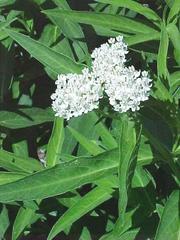
Asclepias incarnata – Ice Ballet Milkweed
‘Ice Ballet’ is an elegant, long-blooming, bright white cultivar of native Asclepias incarnata (Swamp Milkweed) and features a compact habit and dark green foliage. Swamp milkweed occurs throughout most of the United States. It is a tall plant found in moist habitats such as wet meadows, floodplains, riverbanks, pond shores, stream banks, wet woods, swamps, and marshes, although it will also grow in drier areas such as prairies, fields, and roadsides. Asclepias incarnata needs full sun or partial shade to flourish. Flowers are very attractive to butterflies and bees as a nectar source. Swamp milkweed is also an important food source for the larval stage of Monarch butterflies. The plants are deer resistant and heat tolerant.
Available – May 2017
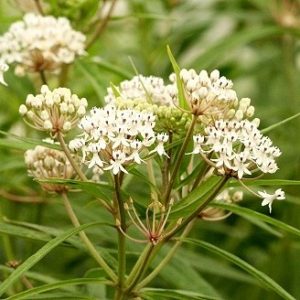
Asclepias perennis – Aquatic Milkweed
Aquatic Milkweed is a petite white milkweed suitable for wet soils. It survives in water and will grow in light-sandy and medium-loamy soils. Native to stream sides it is generally most common in lightly shaded woodlands near streams. This little milkweed is a great performer, being shade tolerant and flowering spring through autumn.
Available to ship mid-late June.
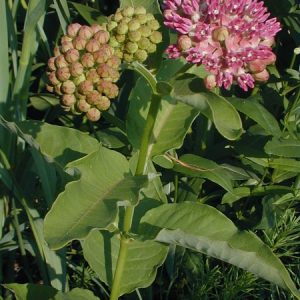
Asclepias purpurascens – Purple Milkweed
DISTRIBUTION
USA: AR, CT, DC, DE, GA, IA, IL, IN, KS, KY, LA, MA, MD, MI, MN, MO, MS, NC, NE, NH, NJ, NY, OH, OK, PA, RI, SD, TN, TX, VA, WI, WV
Asclepias purpurascens – Purple Milkweed is a Michigan native milkweed and is native to most of the eastern United States though it is uncommon to rare in cultivated gardens. Similar to Ascelpeias syriaca (Common Milkweed) it is an excellent garden choice due to its non-invasive nature. It has a long bloom season and the fragrant, intense rosy pink flowers attract numerous insects and butterflies. Purple Milkweed is very tolerant of a wide variety of soils and light levels making it easy to grow. It will tolerate shade, but blooms better in the sun. It commonly occurs in dry to moist open woods, dry ridge tops, thickets, glades, prairie openings, stream banks and wet meadows.
All of our plants are grown without the use of harmful pesticides and are safe for developing larvae.
Grown in 4.5″ square pot.
Available mid-late June 2017
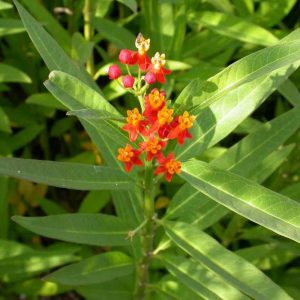
Asclepias curassavica – Tropical Milkweed
Tropical Milkweed, also known as Blood flower, is a tender evergreen perennial in the dogbane and milkweed family. It is native to South America, but has naturalized worldwide in many tropical and subtropical areas. It has a much longer flowering period than the perennial milkweeds that are winter hardy in Michigan. Showy red-orange flowers bloom late spring through late autumn except in USDA Zones 9-11 where it is winter hardy. Grows best in light, rich, evenly moist, well-drained soil in full sun. Will tolerate light shade and some soil dryness. Hummingbirds, butterflies and bees are attracted to the flowers. Monarch butterflies lay eggs on this plant and the resulting larvae (caterpillars) use the plant leaves as a food source. Flowers are followed by long, narrow seed pods (3-4” long) which split open when ripe releasing silky tailed seeds for dispersal by wind. Stems and leaves exude a milky sap when cut or bruised. Plants can be poisonous to livestock. Consider wearing gloves when working with these plants because the milky sap is poisonous if ingested and can be toxic to human skin.
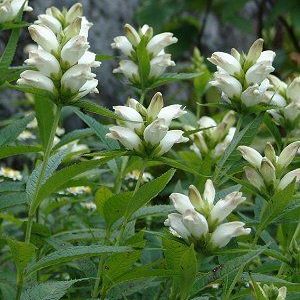
Chelone glabra – White Turtlehead
Host Plant – Baltimore Checkerspot
Spikes of elegant white flowers top shiny green foliage in late summer and early fall. Grows best in moist meadows, stream banks, and swamps. Favorite breeding site for the Baltimore Checkerspot Butterfly.
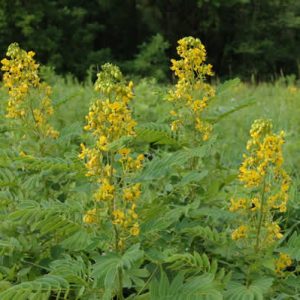
Senna hebecarpa – Wild Senna
Host Plant – Sulphur, Clouded Sulphur, Orange Sulphur
Wild Senna is a versatile plant that we think deserves more recognition as a great choice for garden or restoration projects. Its lovely, bright yellow flowers bloom July-August, attracting many bees and butterflies. Autumn brings beautiful leaf colors and the formation of long black pods with seeds favored by larger birds like wild turkeys. A horizontal root system provides strength against winds, allowing the plant’s stately (4-6′) beauty to be appreciated even after the storm. Some gardeners use this sun-loving plant to form a hedge.
It is virtually indistinguishable from its relative, Maryland Senna (Senna marilandica) until the two species have ripe seeds. The Wild Senna will readily open its pod and the seeds will fall out, whereas the Maryland Senna seed pods will stay tightly closed. Other than this, it is very hard to tell the two species apart.
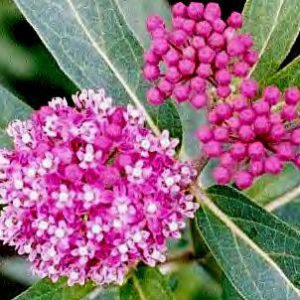
Asclepias incarnata – Cinderella Milkweed
‘Cinderella’ is a cultivar of native Asclepias incarnata (Swamp Milkweed) featuring pale pink, vanilla scented flower clusters. This milkweed occurs throughout most of the United States. It is a tall plant found in moist habitats such as wet meadows, floodplains, riverbanks, pond shores, stream banks, wet woods, swamps, and marshes, although it will also grow in drier areas such as prairies, fields, and roadsides. Swamp milkweed needs full sun or partial shade to flourish. Flowers are very attractive to butterflies and bees as a nectar source. Swamp milkweed is also an important food source for the larval stage of Monarch butterflies.The plants are deer resistant and heat tolerant.
Available – May 2017
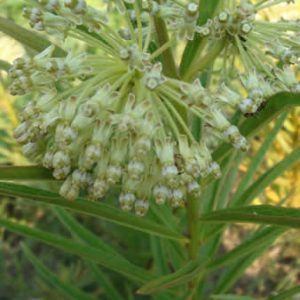
Asclepias hirtella – Tall Green Milkweed
Asclepias hirtella Tall Green Milkweed is a Michigan native although it is considered threatened in the state. Tall Green Milkweed is found throughout the Tallgrass Prairie region in open areas, usually in prairies or remnants of prairies and throughout the midwest. Though not as well known as other varieties of milkweed, Tall Green Milkweed distinguishes itself with abundant clusters of green-white flowers that attract many butterflies and bees.
Other Common Names in use include Green Milkweed.
Available May 2017