Additional information
| Weight | 1 lbs |
|---|---|
| Dimensions | 4 × 4 × 4 in |
| Height | |
| Light | |
| Moisture | |
| Color | |
| Bloom Time |

| Weight | 1 lbs |
|---|---|
| Dimensions | 4 × 4 × 4 in |
| Height | |
| Light | |
| Moisture | |
| Color | |
| Bloom Time |
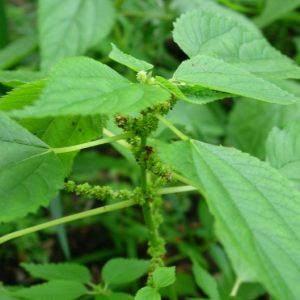
Host Plant – Red Admiral, Eastern Comma, Question Mark Preferring wet-mesic and semi-shady sites, Boehmeria cylindrica lacks the stinging hairs of some of its nettle cousins. Stringy heads of tiny yellow-green flowers form between leaf stems in summer. Moths and butterflies are attracted to this modest plant.
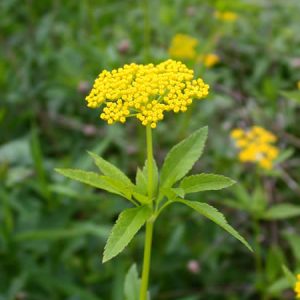
Zizia aurea is one of those natives that every garden should have. It is fairly easy to grow and, although short-lived, will self-seed and persist in many sun/soil situations. Zizia is an important plant to a number of short-tongued insects that are able to easily reach the nectar in the small yellow flowers. Black Swallowtail caterpillars will feed on its leaves.
Golden Alexanders have a long bloom time, giving the garden/prairie some well-deserved early color for several weeks in late spring to early summer when many other plants have not yet flowered. Also called Golden Zizia, Golden Alexanders will tolerate a lot of shade but prefer full sun or light shade.
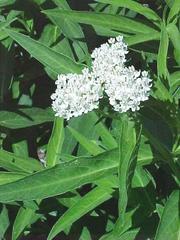
‘Ice Ballet’ is an elegant, long-blooming, bright white cultivar of native Asclepias incarnata (Swamp Milkweed) and features a compact habit and dark green foliage. Swamp milkweed occurs throughout most of the United States. It is a tall plant found in moist habitats such as wet meadows, floodplains, riverbanks, pond shores, stream banks, wet woods, swamps, and marshes, although it will also grow in drier areas such as prairies, fields, and roadsides. Asclepias incarnata needs full sun or partial shade to flourish. Flowers are very attractive to butterflies and bees as a nectar source. Swamp milkweed is also an important food source for the larval stage of Monarch butterflies. The plants are deer resistant and heat tolerant.
Available – May 2017
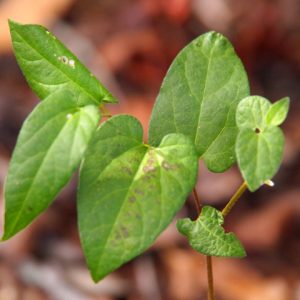
Virginia Snakeroot is one of several species of vines known as “pipevines.” This species grows up to 18 inches tall and has thin, heart-shaped leaves. The stems of the plant tend to zig-zag.
Aristolochia serpentaria is a host plant to the beautiful Pipevine Swallowtail butterfly. It has a wide distribution throughout the United States and is a good shade ground cover for native gardens.
Grown in 4.5″ square pots.
All of our plants are grown without harmful pesticides.
Shipping begins Mid-May.
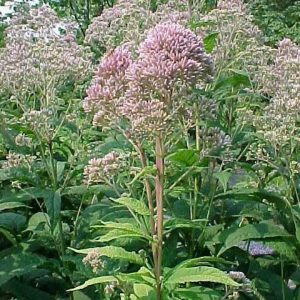
Easily grown in average, medium moisture soils in full sun to part shade. Prefers moist, fertile, humusy soils which do not dry out. Cut plants to the ground in late winter. Best propagated by stem cuttings. This species generally grows … Read More
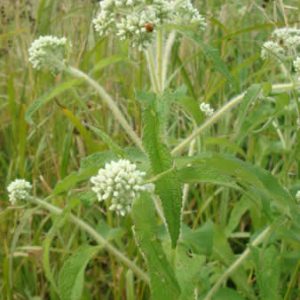
Growing in moist conditions, Eupatorium perfoliatum (Boneset) produces flat to roundish heads of white flowers. The stem is covered with long spreading hairs with leaves that are often joined at the base, appearing to surround the stem. Many different insect species are attracted to the flowers as the nectar is relatively easy to access.
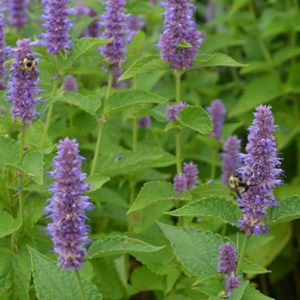
Anise Hyssop has very showy flowers, fragrant foliage and seems to be of little interest to deer. It self seeds readily and often blooms the first year. New seedlings are hardy and can be transplanted easily. It's a bee, hummingbird, and butterfly magnet and makes an excellent addition to herb gardens, borders, perennial gardens, and prairies. When the leaves of the Anise Hyssop are crushed they smell like licorice and have been used to make tea and cold remedies. Other common names in use: Lavender Hyssop or Blue Giant Hyssop
Available May to Mid May.
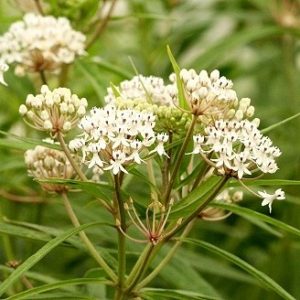
Aquatic Milkweed is a petite white milkweed suitable for wet soils. It survives in water and will grow in light-sandy and medium-loamy soils. Native to stream sides it is generally most common in lightly shaded woodlands near streams. This little milkweed is a great performer, being shade tolerant and flowering spring through autumn.
Available to ship mid-late June.